Showing posts with label God's punishment. Show all posts

Wednesday, 22 February 2012

Benedict XVI on God’s punishment

Church of Santa Sabina 
The Catholic NewsService reporting on Pope Benedict’s homily for the first day of Lent at Rome’s Church of Santa Sabina was filled with some incredibly dark images based on his  frequent literal   rather then interpretative interpretation of Scripture.

In his opening remarks the Pope said . . .   "In the Catholic liturgy, ashes are "one of those material signs that bring the cosmos into the liturgy," he said. They recall both the fact that God created human beings out of the dust of the earth and breathed divine life into them, but also that after Adam and Eve sinned, God cursed the ground and made it bring forth thistles and thorns.  Only by giving this passage a simple literal interpretation could any  reader deduce that it was God who cursed the ground.  Again in clear contradiction of scripture should we not recall that at the end of the sixth day “God looked at everything he had made, and he was very pleased”!  Could it be this passage marks the very first time man tried to create God in his image?

Speaking about the sins of Adam and Eve, Benedict went on to say. . .  “while God punishes people for their sins, his punishment is ‘medicinal’ because God is good and loving' . . . This was followed by an even more challenging theological interpretation as Benedict announced that . . . ‘God sent his son ‘to our earth devastated by sin so that we, prodigal sons and daughters, could return repentant and redeemed by his mercy to our true homeland" in heaven” . . .          

The Pope’s reference to God’s punishment reminds this blogger that our Pope is not only a  theologian with dark fundamentalist (Jansemism) views which sets back Catholicism centuries to the days of the Inquisition, crusades, witch-hunts, and the persecution of Jews but also why he is able to justify his unusual focus on the sexual sins of so many these days.  Our God does not punish, reward, demand, or play favourites - we do.  

The Pope's further suggestion that . . .  "God sent his son was because “our earth was devastated by sin”  . . . . offers yet another clear contradiction.  It ignores  Jesus’ message “I came so that you might have life to be lived in all its fullness’!  (John 10:10) God sent his son because he loves all of his creation.  No greater sacrifice could be made than to die for another, i.e., us!  The Pope’s fear based message is hardly likely to heal anyone’s image of a loving God.  His Augustinian view of the world makes a mockery of God’s unconditional love. (readers may be interested to learn that St. Augustine is Benedict's favourite Saint). BTW the word 'bless' and variations thereof appears more than 85 times in the book of Genesis.   Should that not tell us something about the true nature of God?  

Let us celebrate Lent with the knowledge that God does not punish, reward, demand or send anyone to hell.  God is only interested in blessing us.  Perhaps we could open our hearts to his many blessings and spend the next forty days reflecting on Jesus’ rejection of the only Satan that exists and that is our EGO. Of course as anyone knows that takes true humility and a change of heart. 

Saturday, 2 July 2011

the nature of God

What is the nature of the God we believe in?  What does God look like? Is he male or female or some of both? Does God operate exclusively through formalized religious institutions? Does God still speak to individuals as he did to Moses and Abraham?  Did God come to us with an operating manual such as the bible, Koran, doctrine, or dogma?   Does God get upset or angry when we 'miss the mark' or sin?  Does God need help to convert those who subscribe to different  faiths and beliefs than ours? Did God really eject everyone out of the mystical Garden of Eden? Will God condemn some people to an eternal hell after they die because they have not met certain moral requirements? Is entry to God’s heavenly realm only open to those who have met that moral requirement? 

I believe I have addressed at least some of these questions in earlier blogs.  But here are some additional thoughts about God from people who are a lot smarter than I:

Aquinas’ views on the nature of God are quite complex, but let us suffice it here to understand that Aquinas viewed “God’s substance” as “existence itself.”  Because “God has no body” we cannot understand him by our senses. 

The 12th. Century mystic Meister Eckhard considered the nature of God as follows: “Thou must love God as not-God, not-Spirit, not-person, not-image, but as He is, a sheer, pure absolute One, sundered from all two-ness, and in whom we must eternally sink from nothingness to nothingness.”  True knowledge of this God can only happen by union with him in the mystical experience, not by rational analysis or intellectual reasoning.  That direct knowledge transcends intellectual knowledge.[1]
    
Consider the following quotes from a modern mystic by the name of David R. Hawkins, M.D., Ph.d in his book ‘The Eye of the I – From which Nothing is Hidden (2001)

  • God is beyond perception, duality, positionality, or having parts.  God is beyond all opposites, such as good and bad, right and wrong, win or lose.  Like the sun, God shines equally on all.  God’s love is not reserved for the favoured few.
  • God is not injured by anybody’s wrongdoing and therefore has no trauma to avenge.  The image of God as a retaliatory, cruel punisher is hard to eradicate from one’s thinking.  It is the ego that is the source of guilt, sin, suffering, condemnation, and creation of all the hells.
  • God does not direct floods, conflagrations, earthquakes, volcanoes, storms, lightning, or rainfalls. God does not get mad and ‘thrash out’ cities, civilizations, towns or ethnic groups.  All these things occurred on the planet before there were living societies.
  • God does not get involved in human conflicts, political and religious struggles, or strife. He has no enemies that need to be slain.
  •  God is not a disturbed child or a parent.  He does not read the news or punish the wicked. No arbitrary judgment is required in a universe which is innately just and self-balancing.
  • The infinite mercy and forgiveness of God is beyond any and all conception and is totally unconcerned with the trivialities of world event.
  • In the presence of God, all suffering ceases. There is nothing that needs changing or bettering.
  • The love of God is unconditional.   
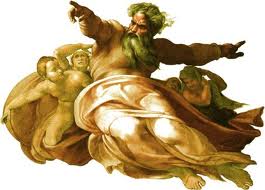
Most of us still carry with us child-like understanding about the nature of our Creator and picture God as the wizened and bearded male sitting on an elevated throne casting judgment upon his people. Others believe that God left us with an exact prescription of right and wrongs supported by our version of Holy Scripture.  Armed with this ‘legal document’ ,but perhaps limited by a shallow understanding of God, we have somehow claimed the right to appropriate God’s judgment by issuing forth God’s  condemnation on all matter of people and things.  In so doing we have by-passed the opportunity to understand God’s unconditional love for others, ourselves and the Creator. 

The purpose of this brief essay is nothing more than to suggest that ’ just as our understanding of nature has evolved, so too should our understanding of God’.[2]
 
 The feeling remains that God is on the journey, too.  ~Teresa of Avila    


[1] Bernard Haisch, The Purpose – Guided Universe: Believing in Einstein, Darwin, and God. (2010)
[2] Bernard Haisch, The Purpose- Guided Universe (2010).