Showing posts with label competing for God's love. Show all posts

Saturday, 2 July 2011

the nature of God

What is the nature of the God we believe in?  What does God look like? Is he male or female or some of both? Does God operate exclusively through formalized religious institutions? Does God still speak to individuals as he did to Moses and Abraham?  Did God come to us with an operating manual such as the bible, Koran, doctrine, or dogma?   Does God get upset or angry when we 'miss the mark' or sin?  Does God need help to convert those who subscribe to different  faiths and beliefs than ours? Did God really eject everyone out of the mystical Garden of Eden? Will God condemn some people to an eternal hell after they die because they have not met certain moral requirements? Is entry to God’s heavenly realm only open to those who have met that moral requirement? 

I believe I have addressed at least some of these questions in earlier blogs.  But here are some additional thoughts about God from people who are a lot smarter than I:

Aquinas’ views on the nature of God are quite complex, but let us suffice it here to understand that Aquinas viewed “God’s substance” as “existence itself.”  Because “God has no body” we cannot understand him by our senses. 

The 12th. Century mystic Meister Eckhard considered the nature of God as follows: “Thou must love God as not-God, not-Spirit, not-person, not-image, but as He is, a sheer, pure absolute One, sundered from all two-ness, and in whom we must eternally sink from nothingness to nothingness.”  True knowledge of this God can only happen by union with him in the mystical experience, not by rational analysis or intellectual reasoning.  That direct knowledge transcends intellectual knowledge.[1]
    
Consider the following quotes from a modern mystic by the name of David R. Hawkins, M.D., Ph.d in his book ‘The Eye of the I – From which Nothing is Hidden (2001)

  • God is beyond perception, duality, positionality, or having parts.  God is beyond all opposites, such as good and bad, right and wrong, win or lose.  Like the sun, God shines equally on all.  God’s love is not reserved for the favoured few.
  • God is not injured by anybody’s wrongdoing and therefore has no trauma to avenge.  The image of God as a retaliatory, cruel punisher is hard to eradicate from one’s thinking.  It is the ego that is the source of guilt, sin, suffering, condemnation, and creation of all the hells.
  • God does not direct floods, conflagrations, earthquakes, volcanoes, storms, lightning, or rainfalls. God does not get mad and ‘thrash out’ cities, civilizations, towns or ethnic groups.  All these things occurred on the planet before there were living societies.
  • God does not get involved in human conflicts, political and religious struggles, or strife. He has no enemies that need to be slain.
  •  God is not a disturbed child or a parent.  He does not read the news or punish the wicked. No arbitrary judgment is required in a universe which is innately just and self-balancing.
  • The infinite mercy and forgiveness of God is beyond any and all conception and is totally unconcerned with the trivialities of world event.
  • In the presence of God, all suffering ceases. There is nothing that needs changing or bettering.
  • The love of God is unconditional.   
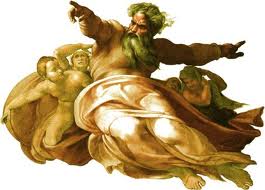
Most of us still carry with us child-like understanding about the nature of our Creator and picture God as the wizened and bearded male sitting on an elevated throne casting judgment upon his people. Others believe that God left us with an exact prescription of right and wrongs supported by our version of Holy Scripture.  Armed with this ‘legal document’ ,but perhaps limited by a shallow understanding of God, we have somehow claimed the right to appropriate God’s judgment by issuing forth God’s  condemnation on all matter of people and things.  In so doing we have by-passed the opportunity to understand God’s unconditional love for others, ourselves and the Creator. 

The purpose of this brief essay is nothing more than to suggest that ’ just as our understanding of nature has evolved, so too should our understanding of God’.[2]
 
 The feeling remains that God is on the journey, too.  ~Teresa of Avila    


[1] Bernard Haisch, The Purpose – Guided Universe: Believing in Einstein, Darwin, and God. (2010)
[2] Bernard Haisch, The Purpose- Guided Universe (2010).

Tuesday, 19 April 2011

A New Creed

Sunrise from Space
A New Creed


We believe in a God who does not punish, reward, make demands or hand out favors.

We believe in a God who came to save ALL not just many.

We believe in a God who does not walk away from us when we ‘miss the mark’.

We believe in a God who does not measure our sins but desires to help us overcome them so that we may profit from them.
 
We believe in a God who came to earth so that we might live life to the full.
 
We believe in a God who does not speak of hell as a place of eternal punishment.

We believe in a God who will accompany comfort and heal us through valleys of pain, loss and suffering.

We believe in a God who descended to the dead to rescue us from the hell we experience on earth.

We believe in a God who does not condemn gays, transsexuals, or anyone else.

We believe in a God who will not rest until ALL are returned to his heavenly realm.

We believe in a God who accepts us as we are not as others would have us be.

We believe in a God whose final justice is based on restoration not punishment.

We believe in a God who has no need for fixed dogma or doctrine or any other human edicts that can stunt our spiritual growth or dependence on him.

We believe in a God who loves us unconditionally.

We believe in a God who created us as his original blessing, imperfect but with unlimited potential to love and be loved.
  
We believe in a God who suffered on the cross not to die for our sins but as the ultimate sign of his love.

We believe in a God whose revelation continues through his Son, creation, scripture and the hearts of humankind and can never be exhausted.

We believe in a God who did not found or require any religious institution with all its trappings but calls us to a way of life in equality with each other.

We believe in a God who did not command anyone to build a structure to house or confine his presence.

We believe in a God who is present in all matter and being throughout the universe.

We believe in a God who created the universe and ALL in it as a sacred image of his being.

We believe in a God whose fastness and love is beyond our comprehension.

We believe in a God who calls us to continuously grow and develop in our understanding of his love.

We believe in a God who engages with us in constant dialogue through heart and mind.

We believe in a God who resides deep within our conscience and thereby participates in our personal choices and decisions without further judgment. 
  
We believe in a God who laughs, enjoys humor, skips, and keeps us safely in the palm of his hand  
   
 *(or the reasons why we needed to leave the institutional church)


Update:  

Wednesday, 29 December 2010

Competing for God's Love

A spiritually enlightened friend recently discovered a religious pamphlet left behind in a church pew entitled On The Number of Sins beyond Which God Pardons No More the subject of a sermon by St. Alphonsus Liguori (1696-1787).

Fr. Alphonsus Maria Liguori was an Italian Catholic Bishop, spiritual writer, theologian, and founder of the Redemptorists, an influential religious order. He was canonized in 1839 by Pope Gregory XVI and declared a Doctor of the Church.


According to this saintly individual God does not forget our sins and balances them against a predetermined number of graces. Ligouri thus warns his audience that since the number of God’s graces are fixed we could eventually reach a point where God will no longer pardon us. Based on this rather distressing information I visited the Our Lady of the Rosary Library the website responsible for distributing this material as well as taking a cursory look at the life of this saint through the eyes of Wikipedia. The one aspect of Liguori’s character that struck me most vividly was his pathological pre-occupation with scrupulosity - a trait that many religious fanatics today seem to admire. Many of Liguori’s sermons most definitely fit into this sad category. Through these homilies we meet a punishing and fearful Deity who demands obedience beyond any human ability to obey him to perfection –instead of to the best of our ability. This God is unable to love us as we are because we only see ourselves, in comparison to God and others, as weak and sinful creatures. In an effort to avoid God’s inevitable vengeance we feel the constant need to deny and punish ourselves (flagellation?} before he and others will. Today, anyone suffering such religious obsessions and compulsions would be advised to seek medical help. If we cannot see ourselves as we truly are we will often compete to be someone else – at the expense of others and worse yet; at the expense of our unique true self!


Anthony de Mello, S.J. said there are three marked instances we first loose our innocence when:


• we compete


• we try to become someone else


• we push ourselves to be holier than we are


Whenever we compete it seems that we are fearful and no longer satisfied or comfortable with the self. In today’s world it seems almost impossible to avoid getting caught up in the never ending quest to be better than our neighbour. Almost from the time we are born we learn to compete for attention and recognition. Later we learn to compete for scholastic, athletic, corporate, and social standing. This never ending cycle is constantly reinforced with many worldly rewards and other ego boosting admonitions.


We all compete when the motivation is strong enough. However, competition is not the real purpose of life. Fulfilling the measure of our creation can only be achieved individually. We are not in competition with any other person, so we do not have to compare ourselves with others. We do not have to become discouraged because we think that someone else is better than we are in a particular area. The essence of our being is equal to that of any other person. There is only one person that can fulfill our role and that is us. This means that others cannot beat us to the finish line because there is no race. This is not to say that others do not have a similar role to us, but it is never the same. This is important to understand if we are going to enjoy life. Every human being is unique and cannot be duplicated.


For centuries the Church has held up various Saints as examples of who we should strive to be. Yet, few people ever ask who that particular saint modeled him/herself after. I believe that the qualities that make an individual so unique are not the qualities possessed by others but rather the recognition that they themselves were loved by God just as they were.


As a postscript It is interesting to note that today Liguori Publications recognizes the problem of scrupulosity and offers several instructional pamphlets to help sufferers deal with the problem.


Many thanks to me friend Steve, for bringing this matter to my attention - it has helped me to better understand my false need to compete for God's love as well as that from others. At the same time it helps me to understand the problem of scrupulosity and how it can mislead us to think of God as someone 'who pardons no more'.


Thanks to the likes of Fr. Richard Rohr I was able to recover from the many fearful images presented by St. Liguori and get back on track with the God I have come to love and appreciate more and more each day. Here follows his message for Tuesday, December 27, 2010. on the memorial of my father’s birthday 1913.


“On that day you will know that I am in the Father, you are in me, and I am in you” (John 14:20)


Most of us return to the garden, this place of union, to our own center, by a rather arduous route. The ordinary path back to Paradise is the blood, guts, and ecstasy of the whole Biblical text: usually three steps forward and two steps backward, just like our lives.

Human life should be a gradual awakening and an occasional quieting, a passion for and a surrendering to, a passionate caring that is balanced by not caring at all (detachment). Transformation happens at both the center and circumference of our lives, and I am finally not in control of either one. But we must begin somewhere.


For most of us the beginning point is at the edges. This reality, felt and not denied, suffered and enjoyed, becomes the royal road to the center. In other words, reality itself, our reality, my limited and sometimes misinterpreted experience, becomes the revelatory place for God within me and yet always also beyond me.


Adapted from Richard Rohr, Everything Belongs, p. 15